🗓 Released Nov 25, 2025
🔁
Cycle Advice
BuyFirst-generation product — recently released, still early days
💰
Deals Advice
neutralNo upcoming deals on the radar
First-generation product — recently released, still early days
No upcoming deals on the radar
Key strengths
One of the largest enclosed build volumes in the prosumer/professional tier — suited for large engineering parts, architectural models, and batch production.
Maintaining 65°C across a 350×350 mm chamber is a meaningful technical achievement — ensuring consistent results for ABS, ASA, and PA across the full build plate.
The S1 Max extends the Kobra ecosystem into the large-format enclosed segment, enabling Anycubic users to scale up without switching brands.
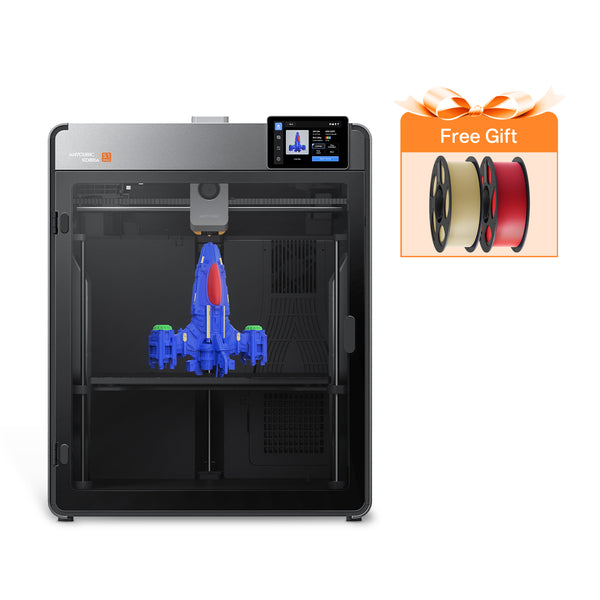
The Anycubic Kobra S1 Max, released November 2025, is Anycubic's large-format enclosed CoreXY with a 350×350×350 mm build volume and 65°C active chamber heating. It brings Anycubic's value-focused approach to the large enclosed engineering printer segment, competing with the Creality K2 Plus and Qidi Plus4.
Both offer large enclosed build volumes with chamber heating at similar prices. The Creality K2 Plus has a more established community and longer track record in the large-format segment. The Kobra S1 Max is newer with Anycubic's ecosystem and 65°C active heating. Evaluate based on regional pricing and your existing ecosystem preference.
The Qidi Plus4 ($699) has a 305×305×280 mm build volume with active 65°C chamber heating and HEPA filtration. The Kobra S1 Max offers more build volume (350×350×350 mm) at a potentially similar price. For maximum build area, the S1 Max. For the best-rounded engineering printer value at this tier, the Plus4's HEPA filtration and proven Klipper-based platform give it an edge.
The 65°C chamber heating significantly improves PA-CF results over open-frame printers. Ensure you use a hardened steel nozzle for carbon-fiber filaments and thoroughly dry your filament before printing. Results will be best for smaller-to-medium parts — very large PA-CF prints across the full 350×350 mm plate will require careful calibration.