🖨 3D Printer Radar
Updated: November 3, 2026How we rate →

This printer has been replaced. The Qidi Tech Plus4 is no longer sold new. The current model is the Qidi Tech Plus5 →

Qidi Tech Plus4
ProsumerFDMqidiCoreXY

Qidi Tech Plus4

📐 305×305×280 mm⚡ 600 mm/s🎨 4-color🏠 Enclosed
Last model:Plus4
$699Starting Price
305×305×280 mmBuild Volume
600 mm/sMax Speed
EnclosedEnclosure

⏰Buy now or wait?

🗓 Released Sep 20, 2024
🔁

Cycle Advice

Superseded

This printer is no longer sold new. It has been replaced by the Qidi Tech Plus5 →

💰

Deals Advice

Clearance

No longer sold new — clearance and second-hand prices are at their lowest. The current replacement is the Qidi Tech Plus5 →

📊Printer Specs

TypeFDM
TierProsumer
MotionCoreXY
Build Volume305 × 305 × 280 mm
Max Speed600 mm/s
Multicolor✅ 4 slots
Enclosure✅ Yes
Auto Calibration✅ Yes
Open Source❌ No

Supported Materials

PLAEasiest to print, great for everyday parts — no enclosure needed
PETGTougher and slightly flexible — good for functional parts, moisture-resistant
ABSHeat and impact resistant — needs enclosure to avoid warping
ASALike ABS but UV-stable — good for outdoor parts, needs enclosure
TPUFlexible and rubber-like — great for phone cases, gaskets, wheels
PANylon — strong and wear-resistant, absorbs moisture, needs dry storage
PA-CFCarbon-fibre nylon — very stiff and lightweight, abrasive to standard nozzles
PCPolycarbonate — extremely tough and heat-resistant, challenging to print
PPS-CFCarbon-fibre PPS — extreme temperature and chemical resistance

💡About the Qidi Tech Plus4

Who is it for?Makers and small businesses who need a large enclosed build volume for engineering materials at a prosumer price — particularly those printing PA-CF, ABS, and PC at scale. Look for clearance deals — the Plus5 is the current model.

Key strengths

  • 305×305×280 mm build volume

    One of the largest build volumes in the prosumer enclosed category — 40% more printable area than the Bambu X1C at a lower price point.

  • Active 65°C chamber heating

    The second-generation active heating delivers consistent chamber temperatures for PA, PA-CF, ABS, ASA, and PC with minimal warping across the full build plate.

  • 370°C bimetal hotend

    Handles high-performance engineering composites including PA-CF, PET-CF, and PPS-CF without requiring a separate hotend upgrade.

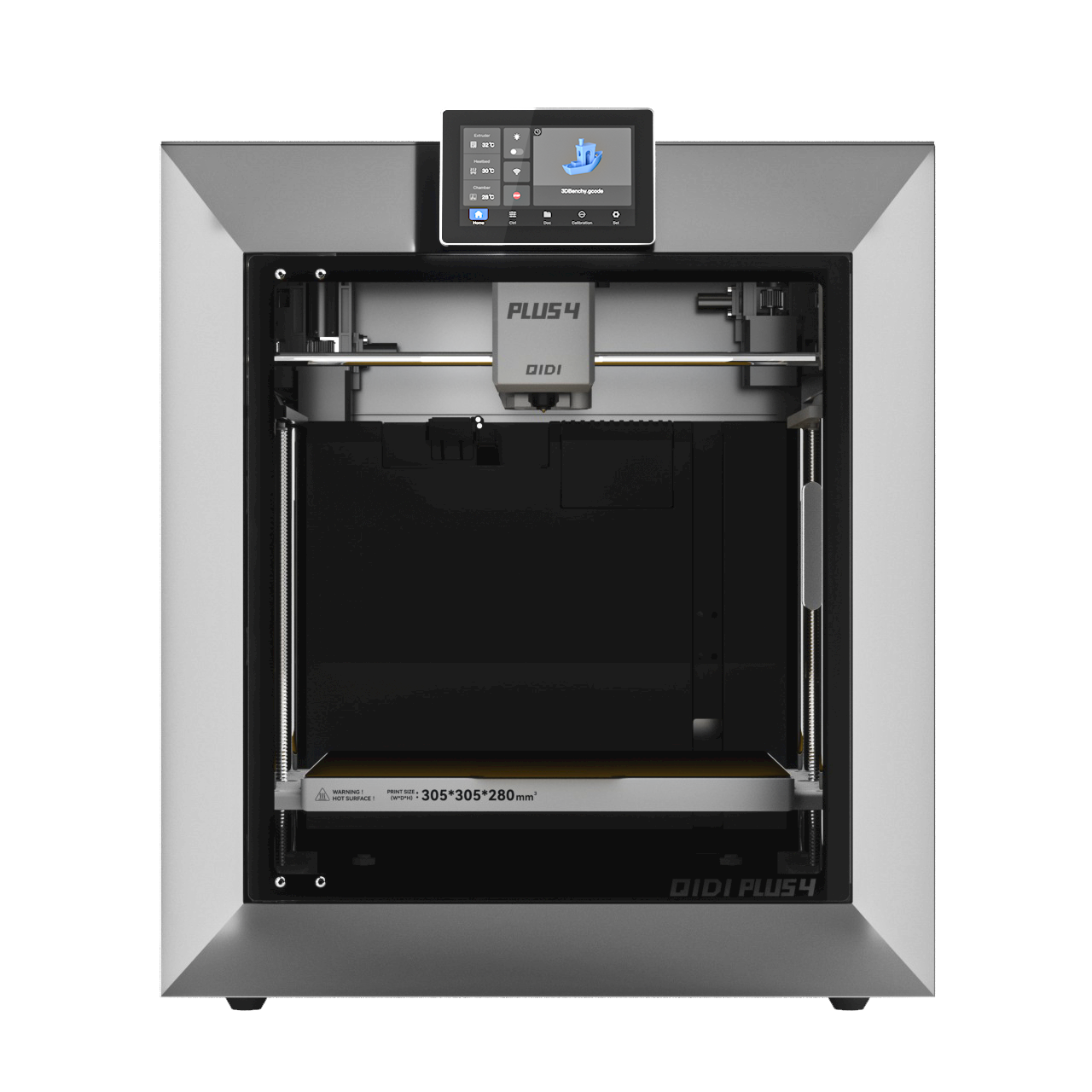
The Qidi Tech Plus4, released September 2024, was Qidi's best-selling prosumer printer. Its 305×305×280 mm build volume — larger than the Bambu X1C's 256×256 mm — combined with active 65°C chamber heating and a 370°C bimetal hotend made it one of the most capable enclosed printers under $700. Nominated for Desktop FFF 3D Printer of the Year 2024. Qidi has discontinued it in favour of the Plus5, which offers an 18% larger build volume, a more powerful chamber heater, and loadcell leveling.
❓FAQs

Should I buy a Plus4 or the Plus5?

The Plus5 is the better purchase — it has an 18% larger build volume (320×320×300 vs 305×305×280 mm), a 550 W third-generation chamber heater, loadcell leveling, and H12 HEPA filtration for $749. Chamber temperature (65°C), hotend temperature (370°C), and top speed (600 mm/s) are unchanged, so a Plus4 at a significant clearance discount remains a capable printer for engineering filaments.

Plus4 vs Bambu X1C — which is the better buy?

The Plus4 ($699) has a larger build volume than the X1C (305×305 vs 256×256 mm) and active 65°C chamber heating at a lower price. The X1C wins on ecosystem: Bambu Studio is more polished, the AMS multicolor system is more mature, and LiDAR-based print monitoring is a genuine differentiator for unattended printing. If build volume is your priority, the Plus4 is hard to beat at the price. If ecosystem quality and reliability matter more, the X1C justifies its premium.

Is the Plus4 good for PA-CF and composite filaments?

Yes — it is one of the best prosumer options for carbon-fiber composites. The 370°C bimetal hotend, 65°C active chamber, and available hardened steel nozzle options make it well-suited for PA-CF, PET-CF, and even PPS-CF. Use a hardened steel or ruby nozzle for abrasive filaments — the stock brass nozzle will wear quickly.

What is the difference between the Plus4 and Q2?

The Plus4 has a larger build volume (305×305×280 mm vs 270×270×256 mm) and costs $200 more ($699 vs $499). For most users, the Q2 is the better value. The Plus4 makes sense if you specifically need the extra print area or are running high-volume production where the larger bed matters.

👀Alternatives & Comparisons