Cycle Advice
WaitX2C or next flagship is on the way. We recommend waiting unless you need a printer right now.
📅 Add launch to calendarDeals Advice
goodGreat time to buy — new model coming soon, current prices near their lowest

X2C or next flagship is on the way. We recommend waiting unless you need a printer right now.
📅 Add launch to calendarGreat time to buy — new model coming soon, current prices near their lowest
Expected mid-2026
The X1C is overdue for a successor. A next-generation flagship — likely called X2C — is expected to introduce improved AI monitoring, faster speeds, and possibly dual extrusion or larger build volume.
| Model/Config | Build Volume | Speed | Multicolor | Best For |
|---|---|---|---|---|
| X1C (standalone) | 256×256×256 mm | 500 mm/s | No (AMS sold separately) | Professional single-color production. |
| X1C Combo | 256×256×256 mm | 500 mm/s | 4 colors (AMS included) | Professional multicolor with full monitoring. |
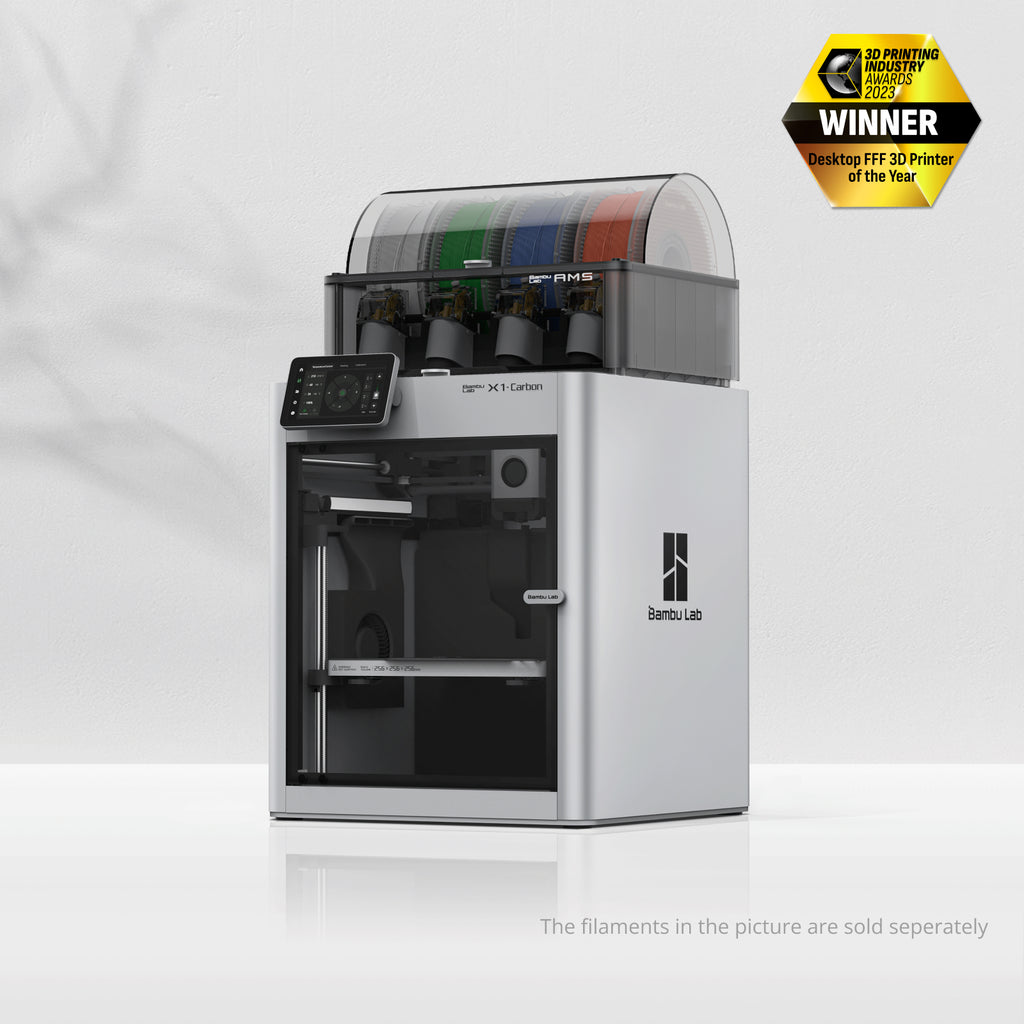
The Bambu Lab X1C is Bambu's flagship enclosed CoreXY printer, featuring LiDAR-based first-layer scanning, AI-powered spaghetti detection, an on-board camera, and a carbon-fiber-reinforced hotend. Released July 2022, it set the standard for prosumer 3D printing and remains competitive — though a successor is overdue.
The X1C's LiDAR sensor maps bed surface deviation and adjusts in real time — the most reliable first-layer consistency in its class.
The built-in camera with spaghetti detection pauses prints automatically when failures are detected — critical for unattended production runs.
The X1C uses a die-cast metal frame and carbon-fiber-reinforced structure for rigidity at high speeds.
Professional makers and small businesses who need the highest level of print monitoring, reliability, and material compatibility in a production-ready package.
Yes — but cautiously. The X1C is feature-complete and still competitive, but it is well past its typical Bambu refresh cycle. If a successor is announced, wait. Otherwise, the X1C at Black Friday pricing is still an excellent purchase.
The LiDAR sensor scans the bed and first layer in real time, compensating for surface irregularities and detecting under/over-extrusion before they cause failures. It significantly reduces first-layer issues compared to contact-based probes.
The X1C adds LiDAR scanning, AI failure detection, and a camera. If you print unattended or run near-production workloads, those features are worth the premium. For hobby use, the P2S delivers 90% of the capability.