🗓 Released Feb 11, 2025
🔁
Cycle Advice
CautionFirst-generation product — no release history to base predictions on
💰
Deals Advice
neutralNo upcoming deals on the radar
First-generation product — no release history to base predictions on
No upcoming deals on the radar
Key strengths
The Kobra S1 combines an enclosed build chamber with 600 mm/s CoreXY motion — offering improved heat retention over open-frame printers for ABS and ASA.
Brings Anycubic's value-focused approach to the enclosed CoreXY segment — competing with Qidi Q2C and Bambu P2S at a lower price point.
A practical cubic build volume well-suited for functional mechanical parts, enclosures, and prototypes.
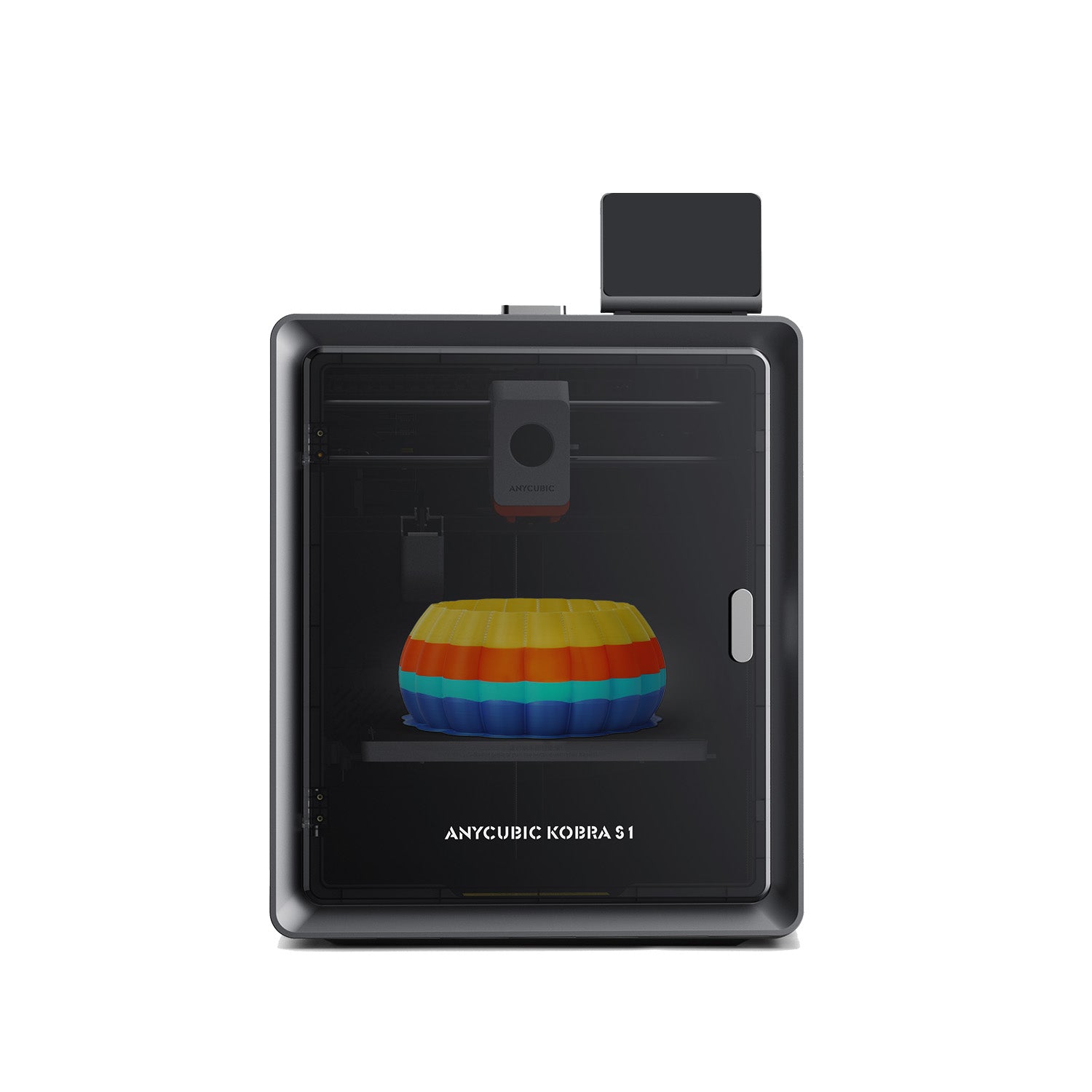
The Anycubic Kobra S1, released February 2025, is Anycubic's enclosed CoreXY with a 250×250×250 mm build volume and passive enclosure. Running at up to 600 mm/s, it offers improved heat retention over open-frame printers for ABS and ASA — though it lacks the active chamber heating found on the Kobra S1 Max and competitors like the Qidi Q2.
The Qidi Q2 ($499) offers active 65°C chamber heating, HEPA air filtration, and a 370°C hotend — making it significantly better for engineering filaments. The Kobra S1 has a passive enclosure only (no active chamber heater), which improves heat retention over open-frame printers but is not sufficient for consistent PA or PC printing. If you need engineering filaments, the Q2 is the better choice. If you primarily print PLA, PETG, ABS, and ASA, the Kobra S1 is a capable enclosed option at a lower price.
The Kobra S1 has a passive enclosure — not active chamber heating. For PA (Nylon), results will be inconsistent on larger parts without active heating; small PA parts may succeed with careful tuning. For PC, the passive enclosure is not sufficient. If you need reliable engineering filament printing, consider the Kobra S1 Max (which has active 65°C chamber heating) or the Qidi Q2.
Yes — two combo configurations are available. The Kobra S1 Combo bundles the printer with the ACE Pro for 4–8 color printing. The newer Kobra S1 ACE 2 Pro Combo upgrades to Anycubic's ACE 2 Pro system, which adds 65°C active filament drying, humidity monitoring, sealed filament storage, runout detection, and 16-color support. The base Kobra S1 is a single-color printer. For single-color enclosed printing, the base S1 is the better value; for maximum multicolor capability, go with the ACE 2 Pro Combo.