🖨 3D Printer Radar
Updated: April 29, 2026How we rate →
Bambu Lab A1
ProsumerFDMbambuBedSlinger

Bambu Lab A1

📐 256×256×256 mm500 mm/s🎨 4-color

Buy now or wait?

🗓 Released Oct 19, 2023
(923 of 365 days through last cycle)
🔁

Cycle Advice

Wait

Overdue for a refresh — no successor announced yet. Prices should be at their lowest

📅 Add launch to calendar
💰

Deals Advice

good

Well past its release cycle with no successor announced — prices at historic lows

📅Deals Calendar

Oct 23
Jan 24
Apr 24
Jul 24
Oct 24
Upcoming sale windows — Prime Day & Black Friday deals (hover for details)

📊Printer Specs

TypeFDM
TierProsumer
MotionBedSlinger
Build Volume256 × 256 × 256 mm
Max Speed500 mm/s
Multicolor✅ 4 slots
Enclosure❌ No
Auto Calibration✅ Yes
Open Source❌ No

Supported Materials

PLAPETGTPUABS

🗂Models at a Glance

Model/ConfigBuild VolumeSpeedMulticolorBest For
A1 (standalone)256×256×256 mm500 mm/sNo (AMS sold separately)Large single-color prints.
A1 Combo256×256×256 mm500 mm/s4 colors (AMS included)Large multicolor prints on a budget.

💡About the Bambu Lab A1

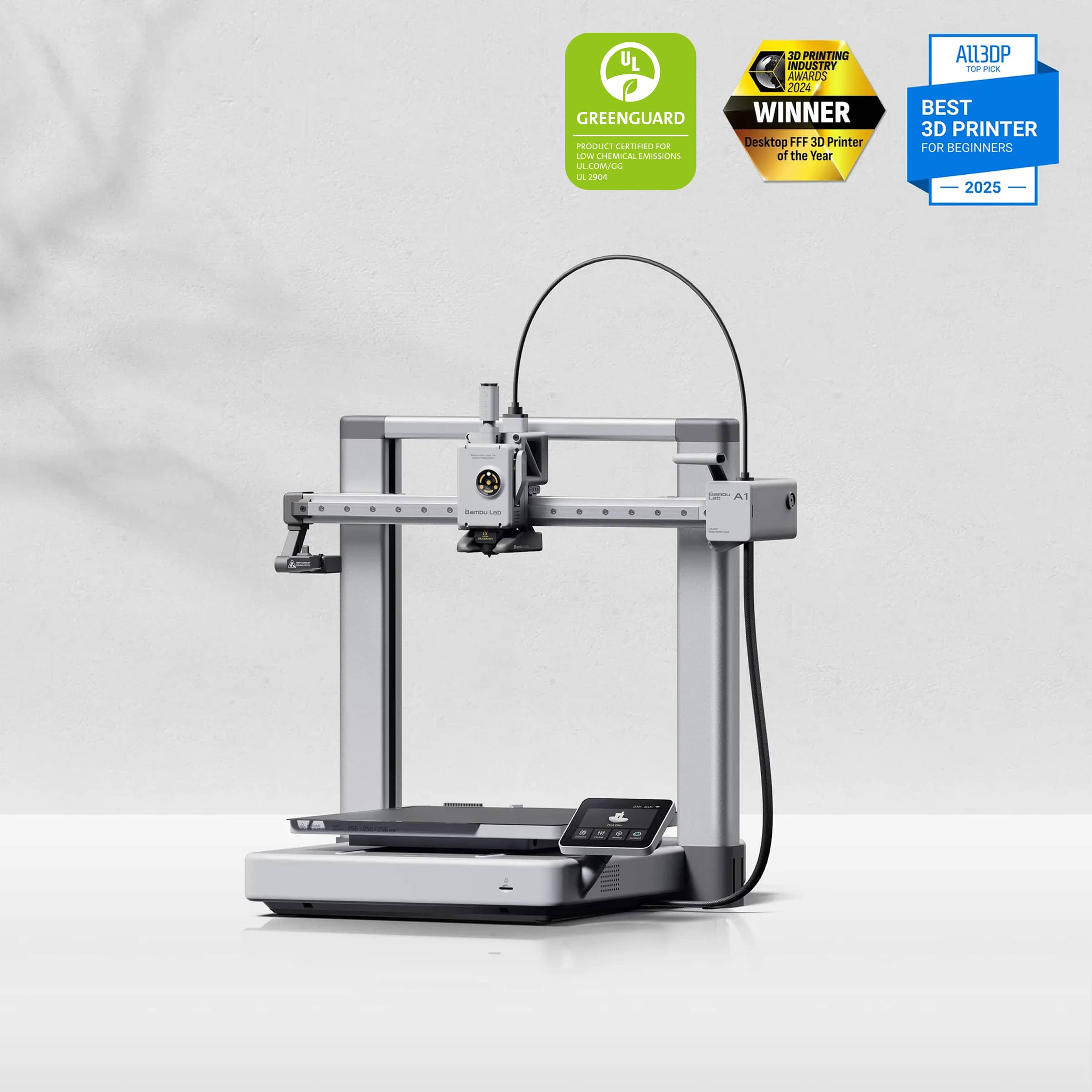
The Bambu Lab A1 is a large-format bed-slinger offering a generous 256×256×256 mm build volume with full AMS multicolor support (4 colors, filament switching). Launched in October 2023, it sits between the compact Mini and the enclosed P-series — ideal for makers who need volume without paying for an enclosure.
  • Full AMS multicolor

    Unlike the A1 Mini's AMS Lite, the A1 Combo includes the full AMS with support for a wider range of filament types.

  • 256×256×256 mm build volume

    The largest build volume available in a Bambu bed-slinger — great for terrain, large cosplay props, and functional parts.

  • Bambu ecosystem integration

    Works with Bambu Studio, Bambu Handy app, and the full Bambu filament ecosystem including multi-material profiles.

🎯Who is this for?

Makers who want large prints and multicolor capability without an enclosure — ideal for PLA, PETG, and flexible materials.

FAQs

A1 or A1 Mini — which should I buy?

If build volume matters, the A1's 256×256×256 mm is significantly larger than the Mini's 180×180×180 mm. The A1 also uses the full AMS (more filament type support) vs the Mini's AMS Lite. If you're printing small objects or on a tight budget, the Mini is the better value.

Does the A1 need an enclosure for engineering materials?

Yes — without an enclosure, the A1 is best suited to PLA, PETG, and TPU. For ABS, ASA, PA, or PC you need the P1S or X1C which include factory enclosures.

Is the A1 good for multicolor printing?

Yes. The AMS (full version included in the Combo) supports 4-color filament switching and handles a wider range of materials than the AMS Lite. Expect some waste from purge towers, which is normal for filament-switching systems.

👀Alternatives & Comparisons